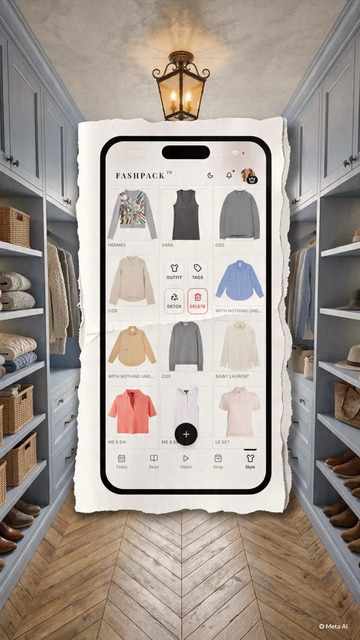
There is something slightly uncomfortable happening in personal styling. For years, a very successful model has been built around the department store, beautiful spaces, beautiful brands, expensive personal shopping suites not to mention access to endless stock and Champagne on tap. And, most importantly, a place for the stylist and client to meet.
It made perfect sense, until the building isn’t there anymore!
The news around Harvey Nichols this week got me thinking about this more broadly. Not because I think department stores are disappearing overnight - they aren’t, just look at the reports of Harrods finally turning profitable after it’s recent payouts but because it is another reminder that the retail landscape we as stylists traditionally built our businesses around, isn’t necessarily the retail landscape we’re going to have forever.
We’ve already seen it with Matches and if you’ve built your entire business around having a particular physical space, a particular retailer or a particular retail ecosystem, that isn’t just somebody else’s problem when the landscape changes. It becomes yours (and it feels incredibly unfair). You put in the hours, championed the retailer to your clients, worked incredibly hard and still you are left behind when it all goes pop.
So perhaps it’s time to leave the building. I don’t mean stop working with retailers, quite the opposite, I think the best stylists will continue to have fantastic relationships with brands and department stores. They will know the buyers, understand the product, get the heads-up on new collections and have access to things their clients wouldn’t necessarily find themselves. But there is a difference between working with retail and being reliant on retail and I think that’s an important distinction for the next generation of personal stylists.
Your client shouldn’t belong to the department store because that’s where you happen to see them in person, your client belongs to you. It is your unique relationship with them and your knowledge of their wardrobe, their sizes, their lifestyle (including the things they loved last season and the things they’ll never wear, the jacket they bought three years ago that suddenly needs bringing back into rotation, the holiday they’re going on in October…) the list is endless. That’s your intellectual property and that relationship should be able to travel with you.
The physical retail floor isn’t the only place a stylist can add value anymore.
We have become very used to thinking of personal shopping as something that happens in a shop but the customer doesn’t necessarily think that way anymore. She might discover a jacket on Instagram, see a bag in an email, save a pair of shoes on Pinterest. Buy something directly from a brand and ask her stylist what to wear with it and then, six months later, realise she has absolutely no idea what else is in her wardrobe.
The opportunity for the stylist is to sit in the middle of all of that. Not as a salesperson for one retailer. As the trusted person helping the client navigate all of it, it’s a very different thing and frankly, I think it’s a much more valuable one. The best thing you can give a client isn’t access to a shop, it’s access to you.
Retailers change, collections change, personal shopping departments open and close, brands get bought (and sold) and some disappear (RIP Raey). The client relationship is the bit that shouldn’t have to change with them. Which is why I’m increasingly interested in the idea of the digital wardrobe as part of the future of personal styling.
Not because I think we need to make everything digital, we absolutely don’t. I want to be clear, I love clothes and I love shops. I love the theatre of retail. I love finding something unexpected on a rail and knowing immediately which client it belongs to.
But I also think there’s something slightly old-fashioned about the idea that a stylist needs to physically be in the same place as the clothes in order to add value. A digital wardrobe means the stylist can see the client’s world wherever they are. You can build outfits from what they already own, you can see what gaps genuinely exist, you can recommend something new without forgetting what they already have, you can keep the relationship going between appointments.
And, perhaps most importantly, the client can take the stylist with them.
At home. Packing. On holiday. Getting dressed for Monday morning.
The department store becomes one part of the ecosystem rather than the ecosystem itself and there is a business reason for this too.
If your business model is: More clients = more hours = more money you eventually hit a ceiling. There are only so many people you can personally shop for in a day.
But if you start thinking about your business as a system of ongoing client relationships, rather than a series of shopping appointments, things become much more interesting.
How do you stay relevant between appointments?
How do you make it easier to work with 30 clients than it was with 10?
How do you keep track of what everyone owns?
How do you create repeatable processes without making your service feel repetitive?How do you give a client more value without simply giving them more of your time?
Those are the questions I think we should be asking now….
The future of personal styling isn’t necessarily about having a bigger shopping suite. It might be about having a better client relationship.
The department store isn’t the enemy. I want to be clear about this because I love retail and I know how valuable those relationships are. The department store can be an incredible partner. But perhaps we need to stop thinking of it as the home of the personal stylist or personal shopper.
It is somewhere we can shop, build relationships, discover product and somewhere we can bring a client when that is the best experience for them.
But our business? That needs to be ours. Because if the last few years have taught us anything, it’s that no retail business is too big to change and that shouldn’t frighten us, it should liberate us. It means we have an opportunity to build something that isn’t tied to a building, a shopping suite or a particular retailer.
Build something that travels, that is more flexible, that belongs to us. And ultimately, something that gives the client what she actually wants: her stylist, wherever she is.
Want to explore a new way of working? This is for you